
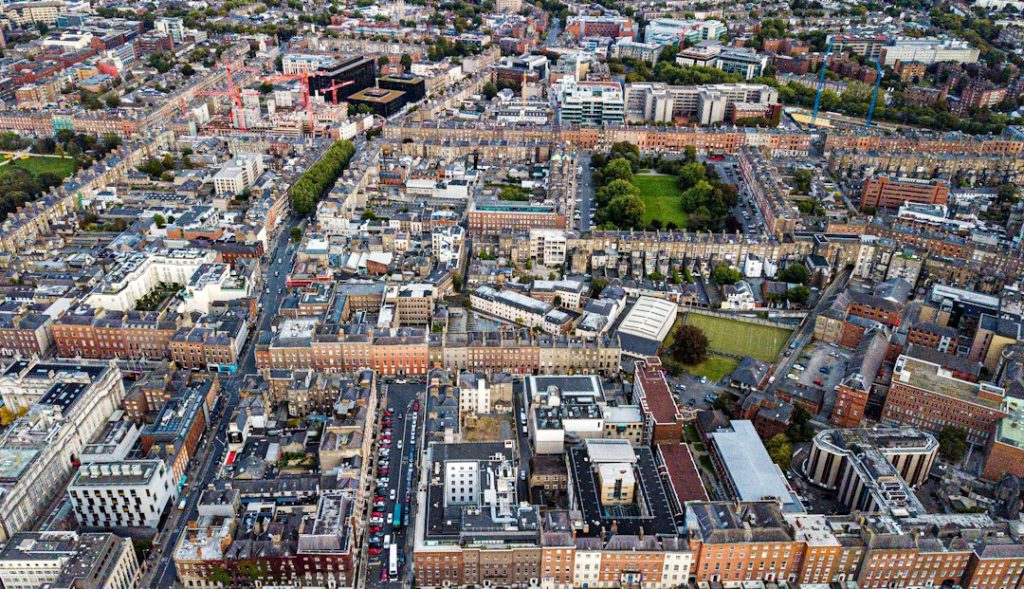
Dublin‘s rental market is notoriously tight and expensive, with average one-bedroom apartments now running $2,100 to $2,600 per month in the city center. But Ireland has more to offer than its capital, and many newcomers are finding better value, shorter commutes, and a higher quality of life by looking beyond the Pale.
If you’re flexible about where you settle — or if your job allows remote or hybrid work — you can significantly reduce your housing costs while still enjoying good amenities, transport links, and community. Here’s how to find affordable housing outside Dublin.
Where to Look: Ireland’s Regional Cities and Towns
Ireland’s other cities and larger towns offer a much more accessible rental market, often with better availability and lower costs. Here are the key options:
- Cork: Ireland’s second city has a strong job market, especially in pharma, tech, and finance. Expect to pay $1,500 to $1,900 for a one-bedroom apartment in the city center, and $1,100 to $1,400 outside it.
- Galway: A vibrant university city on the west coast with a growing med-tech sector. One-bedroom apartments range from $1,400 to $1,800 in the city, less in surrounding towns like Oranmore or Athenry.
- Limerick: Often overlooked, Limerick has seen major regeneration and offers excellent value. Expect $1,100 to $1,500 for a one-bedroom in the city center, with good access to Shannon Airport and a growing tech sector.
- Waterford: Ireland’s oldest city, smaller and quieter, with rents from $1,000 to $1,300 for a one-bedroom apartment. Less competition, but fewer job opportunities outside of specific sectors.
- Commuter towns: Towns within an hour of Dublin — like Drogheda, Dundalk, Navan, Portlaoise, Carlow, and Gorey — offer more availability and lower rents ($1,200 to $1,600 for a one-bedroom), with direct train or bus links to the capital.
Remote workers have even more flexibility and can consider scenic towns like Kilkenny, Ennis, Sligo, or Westport, where rents drop further and quality of life often improves.
How to Search for Rentals Outside Dublin
The same platforms that serve Dublin work nationwide, but you’ll find much less competition and faster response times outside the capital:
- Daft.ie: The largest rental listing site in Ireland. Filter by county, town, and price range. Set up email alerts for new listings.
- Rent.ie: Another major platform with good regional coverage.
- Local Facebook groups: Search for “[Town Name] Rentals” or “[County] Housing.” These can be especially useful in smaller towns where landlords may not advertise nationally.
- Local estate agents: In regional cities and towns, many rentals are managed by local letting agents. Contact them directly — they often know about properties before they’re listed online.
Be ready to move quickly. While competition is lower than Dublin, good-value properties still go fast. Have your references, proof of income, and deposit ready.
Balancing Affordability with Job Opportunities
The trade-off for lower rent is often a smaller job market. If you’re moving to Ireland without a job lined up, or if you’ll need to job-hunt after arrival, consider these strategies:
- Target cities with strong sectors: Cork for pharma and tech, Galway for med-tech, Limerick for aviation and finance. Research the local job market before committing to a lease.
- Negotiate remote or hybrid work: If you’re offered a Dublin-based role, ask if you can work remotely from a regional location, coming to Dublin one or two days a week. Many employers are now open to this.
- Commuter towns: If your job is in Dublin but you want lower rent, towns on the Dublin-Cork, Dublin-Belfast, or Dublin-Galway rail lines offer a middle ground. Expect 60 to 90-minute commutes each way.
- Plan to relocate later: Some newcomers start in Dublin to establish themselves, then move to a regional city once they’ve built a network or secured remote work.
Check commute times carefully using Transport for Ireland journey planner, and factor in the cost of monthly train or bus tickets ($200 to $400 depending on distance).
What to Expect: Renting Outside Dublin
Renting in regional Ireland is generally more straightforward than in Dublin:
- Less competition: You’re more likely to secure a viewing and won’t be competing with 20 other applicants for every property.
- Better stock: More houses and larger apartments are available, often with gardens or parking — rare luxuries in Dublin.
- Longer tenancies: Landlords in regional areas may be more open to longer leases and are often more responsive and communicative.
- Slower pace: Expect a more relaxed approach to viewings and contracts. Things may take a few extra days, but there’s less pressure.
You’ll still need to register your tenancy with the Residential Tenancies Board (RTB) and follow the same legal protections and processes as anywhere in Ireland. Make sure your lease is in writing and that you receive a rent book or receipt for every payment.
Tips for Newcomers
Here are some insider tips to make your search easier:
- Visit the town or city before committing if possible. Spend a day exploring, checking transport links, and getting a feel for the community.
- Join local online groups and forums. Many regional communities are welcoming to newcomers and can offer advice on neighborhoods, schools, and services.
- Don’t assume you need a car. Many regional cities have decent bus networks, and towns on rail lines are very accessible. That said, a car does open up more housing options in smaller towns and rural areas.
- Be aware of broadband quality if you’re working remotely. Check coverage at komm.ie before signing a lease — rural broadband can be patchy.
Moving outside Dublin can feel like a big step, especially if you’re new to Ireland, but it often leads to a better balance of cost, space, and quality of life. With a bit of research and flexibility, you’ll find a place that works for your budget and lifestyle.
Want step-by-step guidance on every part of your move to Ireland? Subscribe to the How To Move To Ireland newsletter and get one practical, actionable tip in your inbox every day — from visas and jobs to housing, healthcare, and settling in.